Aerial Safety Mat Sizing Guide
Why a Safety Mat is Non-Negotiable
A safety mat (also called a crash mat or landing mat) is one of the most important pieces of equipment in any aerial training space. It provides a cushioned landing zone for falls, dismounts, and unexpected drops. Choosing the right size and thickness for your space and apparatus is just as important as choosing the right silk or hardware.
Thickness: How Much Cushioning Do You Need?
Mat thickness is the primary factor in impact absorption. As a general guide:
- 5–8 cm: Suitable for low-level work, aerial yoga, and hammock practice where heights are minimal
- 15–20 cm: The standard for most aerial silk and lyra training.
- 20+ cm: Recommended for higher-level drops, advanced silks work, and professional training environments
Thicker is generally safer, but very thick mats can be unwieldy to move and store. A 10–15 cm mat is the most practical choice for most home and studio setups.
Size: Coverage Area
Your mat needs to cover the area where you're most likely to land. Consider:
- Directly below the rigging point: The minimum coverage area
- Extended coverage: Drops and dynamic moves can carry you 1–2 metres from the rigging point in any direction
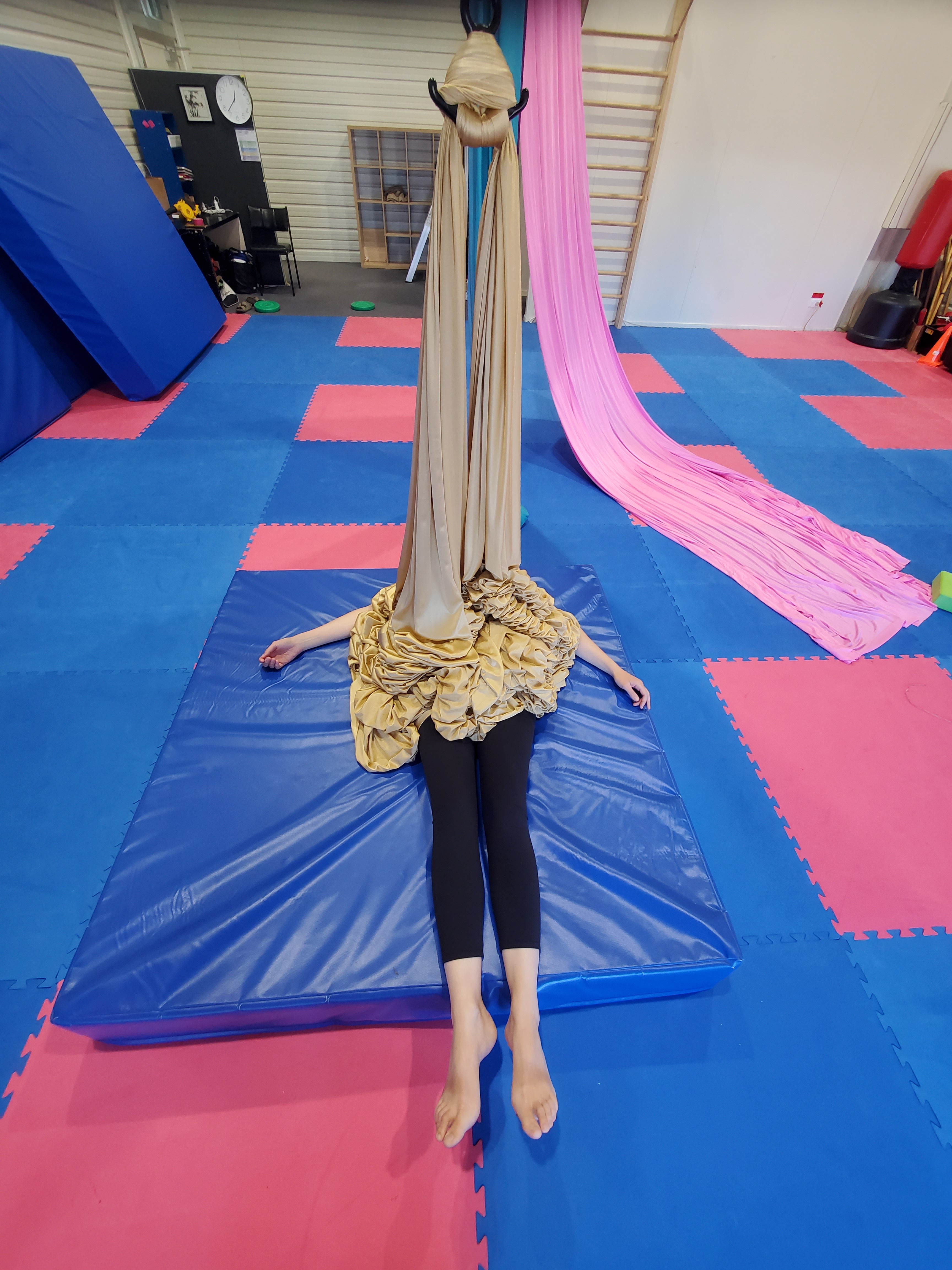
A mat that is at least 1.5 m x 1.5 m is the minimum recommended for most aerial apparatus. For Aerial Silk, you may want a larger mat especially for studio use. Get in touch to discuss custom size options.
Mat Placement
Position your mat so the rigging point is roughly centred over the mat.
Mat Density and Foam Type
Not all foam is equal. Look for:
- High-density foam core: Provides firm, consistent support and doesn't bottom out under impact.
- Durable cover: Vinyl or canvas covers are easy to clean and resistant to wear
Avoid very soft, low-density foam mats — they may feel comfortable but can bottom out on impact, providing little actual protection.
Folding vs Non-Folding Mats
Folding mats (also called gymnastics mats or panel mats) are easier to store and transport but typically thinner (15cm). They're suitable for a low-ceiling situation and home use.
Non-folding crash mats are thicker and provide better protection but require more storage space. For a dedicated aerial space, a non-folding crash mat is the better investment.
Maintenance
Clean your mat regularly with a mild disinfectant spray and cloth. Check the foam integrity periodically — if the mat feels significantly softer or shows visible compression in areas, it may be time to replace it. A compromised mat provides false security.
Training Without a Mat
We strongly advise against training aerial without a mat, even at low heights. Falls are unpredictable and even a short fall onto a hard floor can cause serious injury. A mat is not optional safety equipment — it's essential.
Questions about which mat is right for your space? Get in touch and we'll help you find the right fit.
-
Posted in
aerial hoop, equipment guide, lyra, tape, wrapping