Preparing for Your First Aerial Competition
Your First Competition: Exciting and Terrifying in Equal Measure
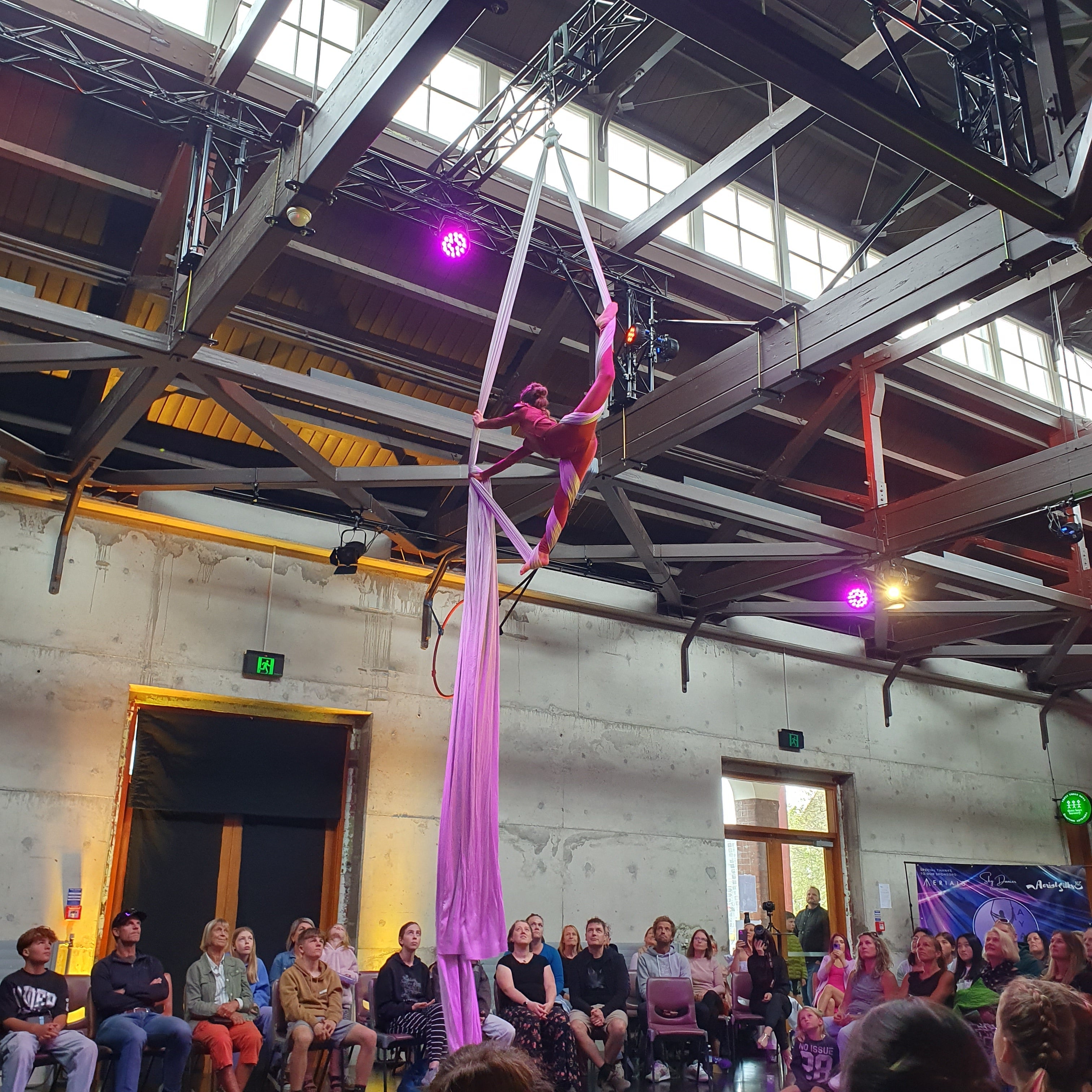
Competing in aerial arts for the first time is a milestone that many aerialists remember vividly. The preparation, the nerves, the performance, and the community atmosphere of a competition are unlike anything else in the art form. This guide helps you prepare thoroughly so you can focus on performing your best on the day.
Choosing the Right Competition
Not all competitions are the same. Look for:
- Beginner or novice categories: Most competitions have divisions by experience level. Enter the appropriate category for your current skill level.
- Apparatus categories: Confirm the competition includes your apparatus (silks, lyra, hammock, etc.)
- Age categories: Many competitions have junior, adult, and masters divisions
- Format: Solo, duo, or group? Judged or non-judged showcase?
For your first competition, a local or regional event with a supportive atmosphere is ideal. Many aerial studios run in-house showcases that are a great stepping stone before entering open competitions.
Timeline: How Far Out to Start Preparing
- 1 months out: Finalise your routine, music, and costume concept. Begin running the full routine regularly in training.
- 2 weeks out: Costume should be complete and tested in training. Identify any equipment needs and order early to allow for production time.
- 2 weeks out: Run your full routine in costume at least once per week. Film every run-through for review.
- 1 weeks out: Reduce training intensity. Focus on quality over quantity. Rest is part of preparation.
- 3 days out: Equipment check, wash your silk, re-wrap your lyra. Confirm all logistics with the competition organisers.
Your Routine
For a first competition, keep your routine achievable and polished rather than ambitious and rough. Judges and audiences respond to clean, confident execution of simpler skills far more than to impressive skills performed poorly.
Routine length is typically 2-4 minutes for beginner categories. Check the competition rules for your specific category.
Music Selection
Choose music that suits your movement style and that you genuinely connect with — you will be listening to it hundreds of times in training. Ensure your music is edited to the correct length and that the edit sounds natural. Many competitions require music to be submitted in advance.
Costume
Your costume should:
- Allow full range of movement without restriction
- Stay in place during inversions and drops (test this in training)
- Not catch on your apparatus or hardware
- Look good under stage lighting (avoid very pale colours that wash out, and test how your costume looks on camera)
Test your costume in a full training session before competition day. Discovering a wardrobe malfunction in training is far better than discovering it on stage.
Equipment Checklist for Competition Day
- Your silk or apparatus (clean and inspected)
- All rigging hardware (check gate function on carabiners)
- Spare tape for lyra re-wrap if needed
- Grip aid
- Costume (plus a backup if possible)
- Warm-up clothing
- Water and snacks
- Music on multiple devices (phone and USB)
- First aid basics
On Competition Day
Arrive early. Use the warm-up time provided. Watch other competitors with a supportive mindset — the aerial community is collaborative, not adversarial. Focus on your own performance, not on what others are doing.
Whatever happens on the day, competing is an achievement. The experience of performing under pressure, in front of an audience, is invaluable for your development as an aerialist.
Need equipment for your competition preparation? Browse our full range and get in touch if you need help with sizing or custom orders — allow extra time for custom production before your competition date.
-
Posted in
aerial hammock, aerial hoop, aerial silks, aerial sling, aerial training, beginner, competition, lyra, performance, preparation