Choosing Your First Aerial Apparatus: Silks vs Sling vs Hammock
So Many Options — Where Do You Start?
Walking into the world of aerial arts for the first time can feel overwhelming. Silks, slings, hammocks, lyra, trapeze — there's a lot to choose from. This guide focuses on the three most popular fabric apparatus for beginners: aerial silks, aerial slings, and aerial hammocks. We'll break down what each one is, who it suits, and what to consider when making your first purchase.
Aerial Silks (Tissue)
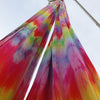
Aerial silks are the iconic long fabric panels you've seen in circus performances. They hang from a single point(two separate tails from one point) and are used for climbing, wrapping, and drops.
Best for: Those who want to pursue circus arts, performance, or a full aerial training journey. Silks have the highest skill ceiling of the three and offer the most variety in technique.
Considerations:
- Requires a higher ceiling (ideally 3m+) for full use, although we have plenty of happy customer practicing their skills with regular ceiling height!
- Steeper learning curve — climbing and footlocks take time to develop
- Physically demanding on hands, feet, and core
- Most versatile apparatus for long-term progression
Aerial Sling (Hammock Sling)
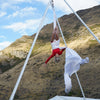
An aerial sling is a shorter loop of fabric, typically 6 to 8 meters long, rigged from a single point. It creates a swing-like structure that sits at hip height or higher. The sling is used for poses, inversions, and flowing movement rather than climbing.
Best for: Dancers, and those interested in low-impact aerial movement and flow. Also great for lower ceiling spaces.
Considerations:
- Works in lower ceilings (3–4 m can be sufficient)
- Gentler on the hands — no climbing required
- More accessible for beginners and those with less upper body strength
- Less variety in advanced technique compared to silks
Yoga Hammock
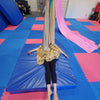
An even shorter loop of fabric, typically 5 meters long, rigged from two point. making it ideal for restorative aerial yoga, inversions, therapeutic use, and sensory swing.
Best for: Aerial yoga practitioners, those seeking therapeutic or restorative practice, and complete beginners who want maximum support.
Considerations:
- Most supportive and accessible of the three
- Excellent for spinal decompression and inversions
- Less dynamic than silks or slings for performance-oriented training
- Can be used at lower heights
Side-by-Side Comparison
| Aerial Silks | Aerial Sling | Yoga Hammock | |
|---|---|---|---|
| Ceiling Height Recommended | 3 m+ | 2.4+ | 2.5m + |
| Strength Required | High | Moderate | Low–Moderate |
| Learning Curve | Steep | Moderate | Gentle |
| Best Use | Circus/Performance | Dance/Yoga/Flow | Yoga/Therapeutic |
| Versatility | Very High | Moderate | Moderate |
Our Recommendation for First-Timers
If you're taking classes at a studio, buy what your instructor recommends — they know the curriculum and what you'll need. If you're setting up at home, consider your ceiling height first: it's the biggest constraint. For low ceilings, a sling or hammock is the practical choice. For high ceilings and a long-term aerial journey, silks are the most rewarding investment.
Still not sure? Send us a message with your space details and goals and we'll point you in the right direction.
-
Posted in
aerial hammock, aerial silks, aerial sling, beginner, buying guide, comparison