What is Tricot Fabric and Why Do Aerialists Love It?
The Most Popular Aerial Fabric in the World
If you have been researching aerial silks, you have almost certainly come across the word tricot. It is the most widely used aerial fabric globally, and for good reason. But what exactly is tricot, how is it made, and why do aerialists at every level love it? This guide answers all of those questions.
What is Tricot?
Tricot (pronounced tree-koh) is a type of warp-knit fabric. Unlike woven fabrics where threads cross at right angles, tricot is knitted — the yarns form interlocking loops that run lengthwise along the fabric. This knitting structure gives tricot its characteristic stretch, softness, and drape.
Aerial tricot is typically made from nylon or a nylon-polyester blend, which gives it strength, durability, and a smooth, slightly silky feel. The fabric has significant stretch in the cross-grain direction (across the width) and minimal stretch in the length direction, which is ideal for aerial work.
Why Tricot Works So Well for Aerial Arts
Stretch and Recovery
The cross-grain stretch of tricot makes wraps more forgiving and comfortable. When the fabric wraps around your body, it conforms to your shape rather than digging in rigidly. This is particularly important for footlocks, hip locks, and body wraps where the fabric is under significant tension against the skin.
Grip
The knit texture of tricot provides natural grip against skin and clothing. This is one of the reasons it is preferred by beginners — it is more forgiving of imperfect technique because the fabric grips rather than slipping.
Durability
Nylon tricot is highly durable and resistant to the abrasion that comes from regular aerial use. With proper care, a quality tricot silk will last years of regular training.
Drape and Aesthetics
Tricot drapes beautifully, creating the flowing, elegant lines that make aerial silks so visually striking. Under stage lighting, the slight sheen of nylon tricot catches the light in a way that enhances the visual impact of performance.
Tricot vs Other Aerial Fabrics
While tricot is the most popular choice, other fabrics are used in aerial arts:
- Nylon/lycra blends: More stretch than tricot, very soft, popular for aerial yoga and hammock
- Polyester: High stretch, preferred by some advanced aerialists for drops
- Cotton blends: Less common, used in some traditional circus contexts
For most aerialists, particularly beginners and intermediate practitioners, tricot is the best all-round choice.
Caring for Tricot
Tricot is easy to care for with a few simple rules: cold water wash, gentle cycle, mild detergent, and air dry away from direct sunlight. See our full fabric care guide for detailed instructions.
Our Tricot Silks
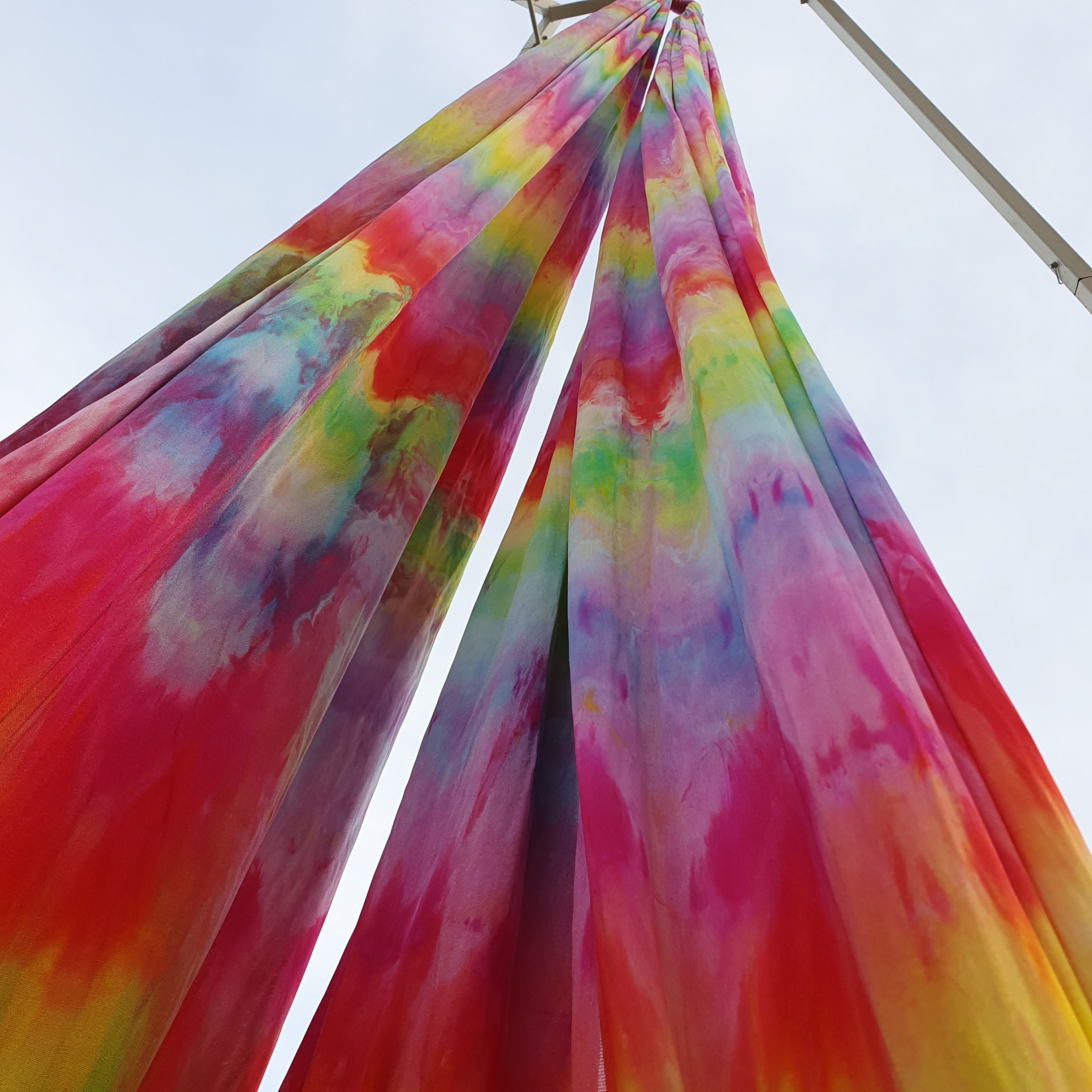
All of our hand-dyed aerial silks are made from high-quality nylon tricot, selected for its strength, grip, and dyeability. Each silk is hand-dyed to order, meaning your silk is unique. Browse our aerial silks collection to find your colour.