Beginner's Guide to Aerial Rigging Hardware
Introduction
Rigging is the foundation of every safe aerial practice. Before you ever leave the ground, your equipment must be correctly selected, rated, and assembled. This guide introduces the essential hardware components every aerialist should understand, whether you're setting up a home studio or working with a venue rigger.
The Anchor Point
Everything starts with your anchor point — the structural element your rigging attaches to. This could be a steel beam, a purpose-built rigging point, or a portable aerial rig. The anchor must be rated to handle the dynamic loads of aerial work (see our guide on WLL vs MBS for load rating details).
Never rig from: plasterboard ceilings, wooden joists without engineering assessment, or any unrated structure.
Swivels
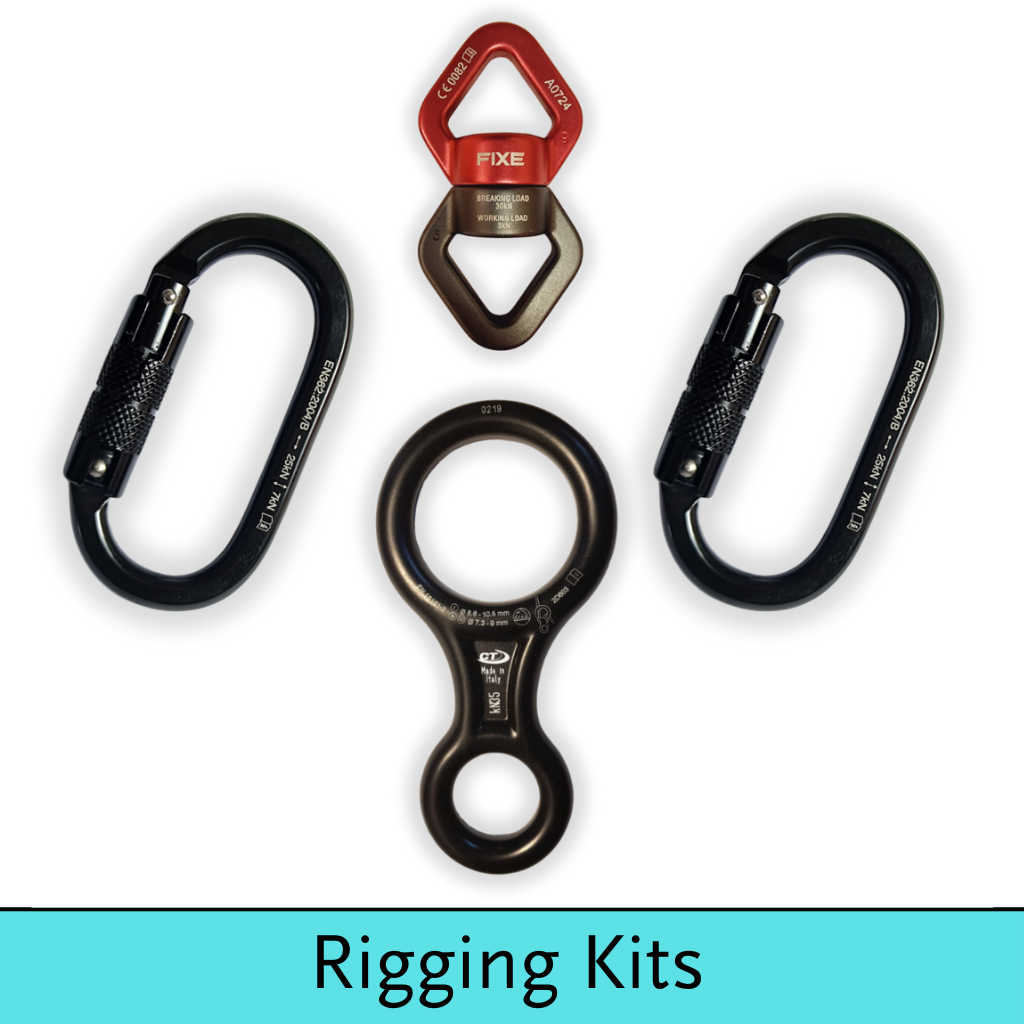
A swivel allows your aerial apparatus to rotate freely without twisting the rigging above it. This is essential for silks, lyra, trapezes and hammock work where spinning is common. Key things to look for:
- Rated for overhead dynamic use (minimum 10:1 safety factor)
- Ball-bearing swivel for smooth rotation
- Stainless steel or rated alloy construction
- WLL clearly marked on the hardware
Browse our aerial swivels — all rated and certified for aerial use.
Carabiners
Carabiners connect components in your rigging chain. For aerial arts, you need locking carabiners — never use non-locking or unrated carabiners overhead. Types include:
- Screw-lock: Manual locking, reliable and simple
- Auto-lock (twist-lock or triple-action): Locks automatically, preferred for high-use environments
Always check that the gate is fully locked before loading. Inspect carabiners regularly for gate play, corrosion, or deformation.
Figure-8 Descenders
Figure-8s are used to attach silks and other fabrics to the rigging point. They provide a secure, low-profile connection and are easy to inspect. Ensure yours is rated for overhead use — climbing figure-8s designed for descending are not always rated for the dynamic loads of aerial performance.
Daisy Chains and Spansets
Spansets (also called round slings) and daisy chains are used to extend your rigging point or wrap around a beam. They are rated by colour and length. Always use rated textile slings — never use rope or improvised materials as a spanset substitute. Daisy chain should only be used for aerial yoga where dynamic loading is minimal.
Assembling Your Rigging Chain
A typical aerial silk rigging chain from top to bottom looks like this:
- Structural anchor point (beam, rigging point)
- Spanset or anchor
- Locking carabiner
- Swivel
- Locking carabiner
- Figure-8 or rescue-8
- Aerial silk
Every component must be rated, inspected before each use, and connected correctly. When in doubt, consult a qualified rigger.
Regular Inspection
Inspect all hardware before every session. Look for:
- Cracks, deformation, or corrosion on metal components
- Gate function on carabiners (should spring closed and lock fully)
- Wear, fraying, or discolouration on textile components
- Smooth rotation on swivels
Retire any component that shows signs of damage or wear. Hardware is not expensive compared to the cost of an injury.
Shop Rigging Hardware
All rigging hardware at Aerial Silks New Zealand is selected for aerial use and comes with full load rating documentation. Shop our rigging hardware collection.